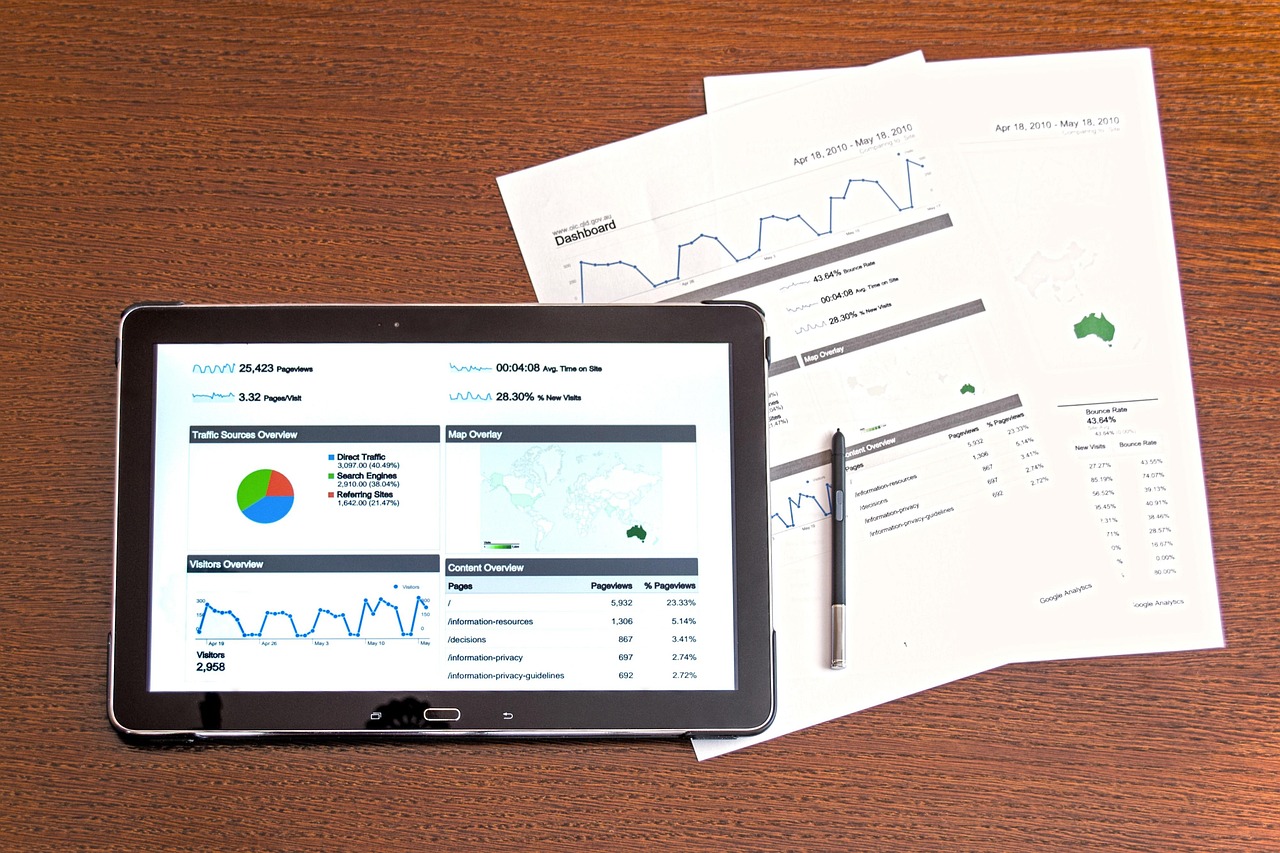
As a marketing agency, your reporting abilities can make or break a client relationship.
You could get the best possible results and hit every campaign objective. But if you don’t communicate this clearly enough, a client might not derive as much value from your services.
With 35% of marketers reporting their biggest challenge being to prove ROI to stakeholders, you need to ensure that your reports count. That’s why it’s crucial to instil a reporting process that clients love. But, how exactly do you do it?
At Lunar, we help marketing agencies look their best at all times. Whether it’s through data analysis or producing well-crafted marketing reports. Here, we’ll explain how to make the best possible reports based on your client’s needs.
What is a Marketing Report?
Starting with the basics, a marketing report is a document that is shared with stakeholders (if you’re an in-house team) or client points of contact (if you’re an agency). Reports aim to capture the work completed over a given period and provide a snapshot of the performance improvements resulting from that activity.
Marketing reports can be delivered in a variety of formats, including standard Word documents to interactive dashboards via tools like Google Looker Studio. But, regardless, the goal is always the same: to communicate what your agency did and what results you’ve achieved.
Types of Marketing Reports
Depending on your relationship with a client, your reporting needs may differ. As such, there are many different kinds of reports that your agency can produce:
Activity Reports
An activity report purely aims to outline the tasks and activities that you have undertaken within a given period. When doing this, be sure to include how many landing pages you have optimised, the number of social media posts you’ve written, a breakdown of numerous marketing campaigns, as well as any supplemental activity that has taken place.
Performance Reports
Performance reports go one step beyond a simple activity report by following up on each activity with an analysis of the results it has generated. So, rather than just stating how much your agency has done, a performance report will outline the results of your efforts, too.
Channel-Specific Reports
If you offer several services to a client, you may break your reporting down into subcategories. This might mean separate reports for each service, such as a standalone social media, email marketing, or SEO report, or a single, segmented and categorised report.
Timely Reports
Agencies often conduct reporting at regular intervals so that clients are fully aware of what’s being done throughout a campaign. In the early stages, nurturing the relationship may require a weekly hands-on report, which later paves the way for monthly/quarterly/annual reports.
What Makes a Quality Marketing Report?

There are lots of things to consider when producing a marketing report – it’s more than just gathering data, compiling it into a document and sending it to a client. The best reports share common attributes that make them truly useful for both you and your clients.
Clarity
Transparent reporting is strong reporting. Reports should provide and explain data in an easily digestible format.
Honesty
Sometimes, things don’t go as planned. Whether it’s through a mistake or a lapse in judgement, all marketing campaigns have peaks and troughs. However, shying away from this, especially during reporting, will almost always backfire.
Data
Without data, a marketing report is simply a collection of words on a page. Data holds the accurate insights and carries the most weight in your marketing efforts. It highlights successes, inefficiencies, and areas for improvement. All you need to do is communicate it.
What Should You Report On?
With agencies often being involved in many different marketing channels, each one will have its own reporting requirements and, therefore, KPIs to include.
SEO Reports
SEO is entirely focused on organic traffic generation (traffic acquired from search/discovery engines).
In an SEO report, agencies should highlight:
- Keyword ranking improvements/losses: The keywords being ranked or punished by search engines.
- Traffic increases/decreases: How traffic has changed over time.
- The top traffic sources to a client’s website: Channels driving the most traffic to your client’s website.
- Conversions: What users are doing on a client’s site, be it buying a product or enquiring about a service.
- Top pages: The pages responsible for driving the most traffic.
Social Media Reports
These days, there are many different social media platforms to manage. Despite this, most share some common attributes that are essential for reporting, such as:
- Follower counts: How many new followers have you gained? Which platforms have gained the most?
- Engagement rates: Measuring an audience’s willingness to interact with a post.
- Post-by-post engagement: The above, but broken down between individual posts and formats.
- Referral traffic: The traffic that social media activity generates.
Email Marketing Reports
Email marketing can be a highly effective way to communicate with a client’s customers and drive repeat business.
When compiling email marketing data, agencies should focus on:
- Email open rates: The rate at which your emails are acknowledged and read by audiences
- Click-through-rates: The links that are driving the most traffic to a website.
- Subscription increases/decreases: Determines the relevancy of email campaigns based on audience interests.
PPC/Paid Media Reports
Paid channels offer clients a much faster method of targeting their users, albeit at the detriment of ongoing costs and account management.
PPC reports should highlight:
- Return-on-ad-spend figures: A measure of your spending efficiency.
- Revenue: Broadening your view to money earned from your efforts.
- Top performing keywords: The phrases that are generating the most returns.
- A/B test results: Helps explain your experimentation and what you’ve learned.
- Cost-per-click figures: Analyse how much you’ve spent on the results you’ve achieved.
Omnichannel Reports
This is where we combine multiple channels of data to give a more rounded understanding of what is working within a business. By combining metrics, you can get an accurate snapshot of the business as a whole.
When creating omnichannel reports, they should include:
- Marketing mix: A mix of all the marketing efforts that are happening for the business, this will include things like SEO, PPC, Social Media and CRMs.
- User journeys: Simple and clear ways in which users flow through a conversion flow, and the drop-off and success rates at each stage.
- Key insights and takeaways: Adding key observations on the data and what can be done with it can really demonstrate value to internal stakeholders or clients.
When creating reports for our agency clients, we always ask ourselves the same question: “If this number were to change, what action would we take?” If our answer is, “we wouldn’t change anything”, then we would likely remove it from our reports.
How to Write a Marketing Report That Wows Clients

Regardless of the type of report you’re producing, there are a few ways of approaching them. While every report is different, each will share some common attributes, which we’ll cover next.
Write an Executive Summary
Before you go into detail later in the report, an executive summary can briefly summarise the points covered. This is your chance to outline what went well and what could have been improved, in plain text.
Remember, for some clients, this is as far as they’ll go with your report. So, a quick, punchy summary can be crucial.
Understand Your Client’s Reporting Needs
Before putting pen to paper, you should have an up-front conversation with your client to help understand their reporting preferences. Ask about what metrics they’d like you to cover, which reporting format works best for them, and who the audience is.
Likewise, if your client has worked with an agency beforehand, it can be worthwhile to ask about their approach to reporting and whether there were any issues with it. This ensures you don’t make the same mistakes as them before you’ve even begun, helping the relationship get off to a good start.
Set Your Time Period
Having a clearly defined time period for your report can make it easier for clients to understand the activity you’re referencing. It also enables direct comparisons with earlier periods. Set this out in the first few pages, and stick to it in the subsequent sections to ensure that your report is organised from the start.
Simplify Your Structure
Structuring a marketing report can depend on the type of report being produced. But, in general, most reports should include:
- What your agency did
- The results of the work you delivered
- Areas of improvement
- Plans for the future
With this structure, your client gets a clear grasp on what has happened, what that means, and what’s happening next.
Automate What You Can
Without automation, writing a marketing report can take a substantial amount of time. By the time you’ve collected your data, comprehended it, and explained it, several hours might pass.
That’s why automation is crucial with reporting. Solutions like our data dashboards and reporting services can give you back the time spent on creating these reports and set you apart from the competition
Clearly, Don’t Confuse
Although data can be hugely beneficial for marketing reports, when things aren’t going in the right direction, it can be tempting to try to hide behind the data.
Blinding clients with metrics they don’t understand will always lead to confusion and distrust, which eventually breaks down the relationship and causes clients to churn. Instead, you should always prioritise transparency in your reporting – when things fail, be honest about it. Your client would much rather you come clean and explain yourself than intentionally leave out details.
Our Top Reporting Tips
So, now that you know what goes into a marketing report, how do you truly make them stand out? Here are some of our top tips for writing the perfect marketing report.
1. Show Comparisons
Context is crucial with reporting. That’s why comparisons can be beneficial to illustrate the magnitude of any performance increases you’ve achieved. Without looking back, clients may fail to grasp the actual value of your contributions, leaving you in a tricky position where your worth isn’t fully realised.
However, if you compare recent figures to a previous point in time, you can tell a compelling story that demonstrates how a project has grown over time.
You can also include industry benchmarks to show how the client is performing versus the competition, alongside anomaly detection to show spikes both increasing and decreasing. All of these are standard features of our marketing agency reporting tools.
2. Use Visuals

Visual aids are a powerful tool in marketing reports. Not only do they help explain data in an easily shareable format, but they also keep your reports engaging and interactive. Rather than summarising figures buried in paragraphs, use charts, diagrams, and graphics to illustrate data and keep your client’s attention.
3. Avoid Vanity Metrics
For the most part, vanity metrics are little more than exactly that – vanity. Unless they contribute to a business goal, you should refrain from reporting on meaningless metrics and instead prioritise KPIs that your client cares about.
It is important to take the metrics that are the closest to your clients’ goals, not the ones that the agency deems important.
4. Remove Jargon Where Possible
Marketing is full of jargon. ROAS, CPC, SEO – for those that don’t live and breathe it, jargon causes more confusion than it’s worth. As such, it’s a good idea to avoid it where you can, and instead explain things in your client’s language.
If you really cannot avoid using jargon, you can also include a term sheet which just defines each term in plain English. This means that the client always has something to refer back to if they are confused.
5. Don’t Just Show – Tell
Marketing reports can often get lost when they have no meaning. A lack of substance or a lack of clarity in your findings can leave clients with more questions than answers.
When providing a report, be sure to follow up with clear explanations around why things have changed, what this means (in plain English), and what the next steps are.
Improving Your Reporting With Clear Data
At Lunar, we work with agencies to help them refine their reporting processes and communicate their true value to clients.
With our marketing data and reporting services, we use a mixture of attribution modelling, server-side tracking, and data analysis to paint clear narratives on how effective your work is. Plus, we do it all behind the scenes, so that you can continue to impress clients and showcase your expertise.
Start loving marketing data, with Lunar. Get your free data report from us today.