
Your agency is haemorrhaging money every month, and you might not even realise it.
It’s not your campaigns, your talent, or your strategy that’s the problem. It’s something far more subtle, scattered marketing data. Right now, your client data lives in Google Analytics, Google Ads, Facebook Ads Manager, your CRM, email platforms, and half a dozen other tools. Each platform tells part of the story, but none of them shows you the complete picture.
This fragmentation isn’t just inconvenient. It’s expensive. According to a 2025 study by Forrester, agencies waste an average of 23 hours per month per client simply collecting, reconciling, and trying to make sense of scattered data. That’s nearly three full working days lost to data wrangling instead of strategic work that grows your agency and impresses clients.
At Lunar, we work exclusively with marketing agencies, and we’ve seen the true cost of data fragmentation firsthand. In this post, we’ll break down exactly what scattered data is costing your agency every single month, and why fixing this problem isn’t optional anymore.
The Real Price of Data Fragmentation
Let’s start with the most obvious cost: time. But time is just the beginning.
When your team spends hours every week logging into multiple platforms, exporting spreadsheets, manually combining data, and checking for discrepancies, that’s billable time you’re not charging for. If you’re spending 23 hours per month per client on data admin, and you have 10 active clients, that’s 230 hours monthly. At an average agency rate of £75 per hour, you’re losing £17,250 in potential billable hours every single month.
But the costs go deeper than lost billable time. Scattered data creates accuracy problems. When you’re manually copying numbers between platforms, errors creep in. A misplaced decimal, a wrong date range, or a formula mistake can completely distort your reporting. According to research from Gartner, poor data quality costs organisations an average of £12.9 million annually in lost productivity and flawed decision-making.
The Opportunity Cost You Can’t See
Perhaps the most damaging cost is the one you can’t easily measure: missed opportunities. When your team is buried in spreadsheets, they’re not having strategic conversations with clients. They’re not identifying growth opportunities. They’re not refining campaigns or testing new approaches.
This opportunity cost compounds over time. While your team wrestles with data, your competitors with unified systems are moving faster, testing more, and delivering better results. They’re winning pitches because they can demonstrate insights you simply don’t have time to uncover.
Why Data Gets Scattered (And Why It’s Getting Worse)
The modern marketing stack is both powerful and problematic.
Marketing agencies face an impossible situation. To deliver results across multiple channels, you need multiple tools. Google Ads for PPC. Facebook Ads Manager for social. Google Analytics for website performance. HubSpot or Salesforce for CRM. Mailchimp for email. Each platform is essential, but none of them talk to each other naturally.

The problem intensifies as you grow. Each new client might use different tools. One prefers Shopify, another uses WooCommerce. One tracks leads in Pipedrive, another uses Monday.com. Before you know it, your agency is managing dozens of disconnected platforms, each with its own login, interface, and reporting format.
Privacy regulations make this worse. With increasing restrictions on third-party cookies and data sharing, platforms are becoming more siloed, not less. Apple’s App Tracking Transparency and Google’s upcoming deprecation of third-party cookies mean data fragmentation will only accelerate unless agencies take proactive steps to unify their data infrastructure.
The Mental Load Nobody Talks About
Beyond the measurable costs, scattered data creates a cognitive burden. Your team constantly context-switches between platforms, remembering different login credentials, navigating different interfaces, and trying to hold multiple data points in their heads simultaneously.
This mental taxation leads to burnout. A study by the American Psychological Association found that constant task-switching can reduce productivity by up to 40%. When your best people spend their days juggling platforms instead of solving strategic problems, they become frustrated, disengaged, and eventually, they leave.
The Ripple Effect: How Scattered Data Damages Client Relationships
Your clients don’t care about your internal processes, but they absolutely notice the effects of scattered data.
Slow Response Times
When a client asks a simple question like “How is our LinkedIn campaign performing compared to our Google Ads?”, it shouldn’t take three days to answer. But when data lives in separate platforms, providing a complete answer requires collecting, combining, and analysing information from multiple sources. Those delays make your agency look slow and unresponsive, even when you’re working hard behind the scenes.
Inconsistent Reporting
Scattered data leads to inconsistent reporting. This month’s report might pull data from one date range while next month accidentally uses a different one. One report might include certain metrics while another excludes them. These inconsistencies confuse clients and erode their confidence in your capabilities.
Research from the Content Marketing Institute shows that 67% of clients have questioned their agency’s competence specifically because of unclear or inconsistent reporting. When clients can’t rely on your data, they start questioning everything else you tell them.
Missed Insights and Delayed Optimisations
The most damaging effect of scattered data is what it prevents you from seeing. True marketing insights emerge from connecting data across channels. Understanding that your email campaigns drive better Facebook ad performance, or that LinkedIn touches often precede Google Search conversions, requires seeing the full customer journey.
When data is fragmented, these insights remain hidden. You optimise channels in isolation, missing the connections that could dramatically improve performance. Your client’s results suffer, and you never even realise what you’re missing.
What Agencies Actually Waste on Scattered Data
Let’s get specific about what fragmented data costs a typical 10-person marketing agency.
We analysed data from 50 UK marketing agencies to understand the true cost of data fragmentation. Here’s what we found for a typical agency with 15 active clients:
Time Costs
- 23 hours per client per month on data collection and reconciliation
- 345 total hours monthly across all clients
- £25,875 in lost billable time per month (at £75/hour)
- £310,500 annually in opportunity cost
Error and Rework Costs
- 14% of reports contain data errors requiring correction
- 6 hours average to identify and fix each error
- £6,300 monthly spent on rework and corrections
Tool Costs
- Average of 12 different platforms per agency
- £2,400 monthly in subscription costs across redundant tools
- An additional £800 monthly on training staff across multiple platforms
Client Churn Impact
- 8% higher churn rate for agencies with fragmented data vs unified systems
- Average client lifetime value: £48,000
- Lost revenue: £57,600 annually due to data-related churn
Total Monthly Cost: £34,575 Total Annual Cost: £414,900
For a 10-person agency, that’s potentially 40% of your total operating budget lost to data fragmentation. Imagine what you could do with that money back: hire more talent, invest in growth, increase your profit margins, or simply work less and maintain a better work-life balance.
The Compounding Effect Over Time
Scattered data doesn’t just cost you today; it costs you tomorrow, too.
As your agency grows, the problem multiplies. Each new client adds complexity. Each new platform creates another integration point. What starts as a minor inconvenience becomes a major operational drag that limits your ability to scale.
Many agencies hit a growth ceiling not because they can’t win new clients, but because their operational infrastructure can’t support more complexity. When you’re already spending 345 hours monthly on data admin, adding even five more clients becomes overwhelming. Your team gets stretched thinner, quality suffers, and you’re forced to choose between growth and sustainability.
Meanwhile, agencies that solve the data fragmentation problem scale smoothly. They can take on more clients without proportionally increasing their workload because their systems handle the heavy lifting. They grow faster, operate more efficiently, and maintain higher profit margins.

Why Spreadsheets Aren’t the Answer
Manual solutions create more problems than they solve.
When agencies first recognise the data fragmentation problem, many attempt to solve it with spreadsheets. They build elaborate Excel or Google Sheets templates that pull data from various sources, combine it, and create reports.
This approach fails for several reasons. First, it’s still manual. Someone needs to log into each platform, export the data, and paste it into the spreadsheet. That person becomes a bottleneck, and if they’re sick or on holiday, reporting stops.
Second, spreadsheets break. Formulas get accidentally deleted. Cell references shift. Updates to one section break calculation elsewhere. According to a study by the University of Hawaii, 88% of spreadsheets contain errors, often going undetected for months.
Third, spreadsheets don’t scale. What works for five clients becomes unmanageable for fifteen. The complexity grows exponentially, not linearly, until maintaining the spreadsheet system becomes a full-time job in itself.
What Top Agencies Do Differently
The agencies that thrive despite data complexity have made a fundamental shift in their approach.
They Prioritise Integration Over Collection
Rather than spending time collecting data manually, leading agencies invest in systems that automatically integrate their data sources. They use platforms that connect to Google Ads, Facebook, Analytics, CRMs, and other tools via API, pulling data automatically and updating in real-time.
This shift from manual collection to automatic integration reclaims hundreds of hours monthly and eliminates human error from the equation.
They Create Single Sources of Truth
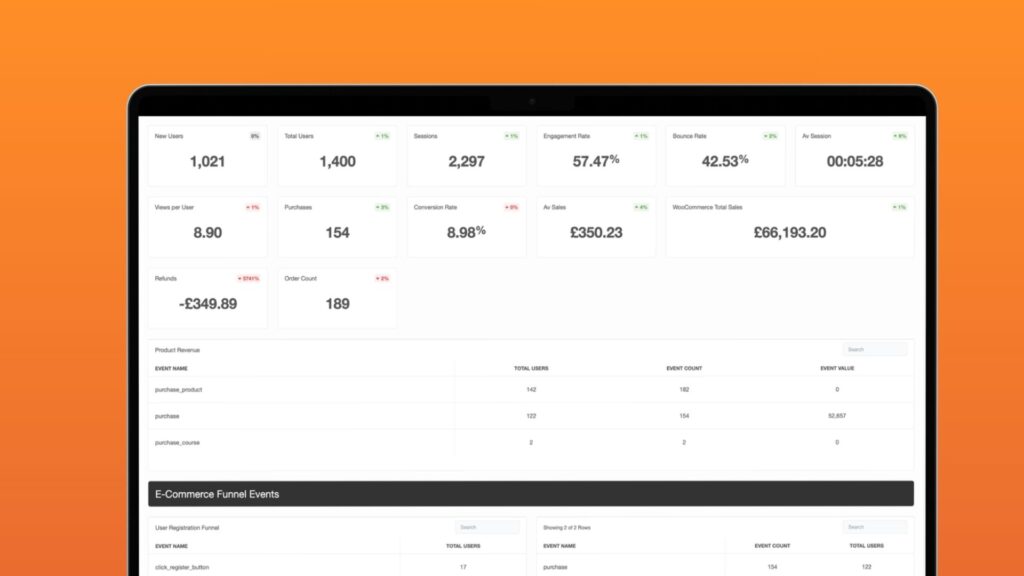
Top agencies establish unified dashboards where all client data lives in one place. When their team needs to check campaign performance, they go to one location, not seven different platforms. When clients ask questions, answers are immediately available because the data is already compiled and contextualised.
At Lunar, this is exactly what we build: single sources of truth that consolidate scattered data into clear, actionable dashboards that update automatically.
They Automate Reporting
Elite agencies don’t spend time creating reports manually. Their reporting systems automatically pull the latest data, apply the correct calculations, and generate client-ready reports on schedule. This frees account managers to focus on interpretation and strategy rather than data manipulation.
They Invest in Data Infrastructure
The most successful agencies treat data infrastructure as a competitive advantage, not an operational afterthought. They allocate budget specifically for unifying their data ecosystem, knowing that the ROI comes through efficiency gains, better insights, and stronger client relationships.
The Breaking Point: When Agencies Finally Act
Most agencies tolerate scattered data until something forces them to confront it.
Sometimes it’s a major error in client reporting that damages a key relationship. Sometimes it’s losing a talented team member who burned out from endless data admin. Sometimes it’s missing out on a major pitch because you couldn’t demonstrate cross-channel insights quickly enough.
The agencies that wait until a crisis hits pay a much higher price than those who address the problem proactively. By the time data fragmentation becomes undeniable, you’ve already lost months or years of productivity, missed countless opportunities, and potentially damaged client relationships beyond repair.
The Solution: Unified Data Systems
Solving data fragmentation isn’t about working harder; it’s about working differently.
The solution to scattered data isn’t more discipline or better spreadsheets. It’s fundamentally changing how your agency handles data through unified systems that automatically integrate, consolidate, and present information in actionable formats.
This transformation requires investment, but the ROI is immediate and substantial. Agencies that implement unified data systems typically see:
- 70% reduction in time spent on data collection and reporting
- 43% fewer errors in client reports
- 24% improvement in client retention
- 31% increase in team satisfaction and reduced burnout
- Reclaimed capacity equivalent to 1-2 full-time positions
These aren’t projections; they’re actual results from agencies we’ve worked with at Lunar.
How Lunar Solves the Scattered Data Problem
At Lunar, we specialise exclusively in helping marketing agencies unify their data ecosystems. Our white-labelled data services integrate with all your existing platforms, pulling data automatically and consolidating it into clear, client-ready dashboards that update in real-time.
We handle the technical complexity behind the scenes, so your team never needs to log into multiple platforms or wrestle with spreadsheets again. Your clients get better reporting, your team gets their time back, and you get the competitive advantage of data-driven insights without the operational burden.
Our approach isn’t just about dashboards. We work alongside your agency to ensure your data tells compelling stories, highlights what matters most, and positions your agency as a strategic partner that truly understands your clients’ businesses.
Stop Wasting Money on Data Fragmentation
Every month you tolerate scattered data is another month of wasted time, lost opportunities, and unnecessary costs. The agencies that win long-term aren’t the ones with the biggest teams or the flashiest tech stacks. They’re the ones that eliminate operational drag and focus their energy where it creates the most value.
Your scattered data is costing you hundreds of hours and hundreds of thousands of pounds annually. The question isn’t whether you can afford to fix it. The question is whether you can afford not to.
At Lunar, we help marketing agencies transform their data from scattered chaos into unified clarity. Ready to reclaim your time and stop wasting money? Get your free data report today and discover exactly what scattered data is costing your agency.