Efficiency in marketing is a tale as old as marketing itself. For decades, freelancers, in-house teams, and especially agencies have attempted to streamline their workflows to help them work smarter, quicker, and more efficiently.
While advancements in tech have enabled marketers to work at a faster pace, there are a myriad of tools, techniques, and processes that agencies can follow to help free up precious brain space to dedicate to what really matters: impressing clients with excellent results.
Whether you’re a small agency or a large corporation, you’re probably aware of a process that takes ever so slightly too long, or have a task that could do with a refresh. Regardless of your size, we’re here to help.
In this article, we’ll explain how to improve marketing efficiency in an agency setting, helping you unlock greater results and happier clients.
Develop SOPs (Standard Operating Procedures)
Consistency is the foundation of efficiency. Being able to reliably produce a similar amount or quality of work means that teams are better prepared to tackle their daily tasks with confidence.
To achieve this, we recommend using SOPs. Standard Operating Procedures are nothing new; in fact, the term dates back to the mid-20th century and is used in a variety of industries, from healthcare to even military applications.
The goal of an SOP is simple: provide teams with a set of instructions needed to complete a task in a timely and effective manner. In marketing, this could relate to numerous tasks, from blog writing to keyword research – standardising your approach guides your team towards practical, reliable task completion.
These days, there are many ways of developing SOPs. You could go the old-fashioned way with a Microsoft Word doc and screenshots, or you can use tools like Scribe that will record your actions as you work through a task.
Of course, be sure to leave a little bit of room for your team to try their own approach. Just because a task can be conducted repeatedly doesn’t mean there isn’t a better way of doing it.
How We Handle SOPs
At Lunar, we follow the Demonstrate, Document, Duplicate process for creating SOPs. Under this, we show the procedure in practice; make notes and produce a document with them (or update an old one); then ask the trainee to duplicate and showcase what they’ve learned.
Embrace Artificial Intelligence
Over the past four years, the sentiment of using AI in marketing has shifted to and fro.
On one hand, there are die-hard AI fans who claim it to be yet another technological revolution that’s here to make people’s lives easier and better. On the other hand, there are sceptics who claim that AI is anything but.
In an attempt to provide a balanced viewpoint, various studies have been conducted into the use of AI. One in particular was produced by Ahrefs, and it shows that 74% of webpages include AI content. Plus, with trusted news outlets like CNN using AI in their website’s content, it’s clear that this technology is here to stay.
Regardless of your opinion, the efficiency gains that AI promises are hard to turn down. From planning content to uncovering AI-powered data insights, AI tools can undoubtedly help marketers move through their daily tasks quickly.
When using AI, however, be sure to do so responsibly. Chatbots are prone to making mistakes, so you should always fact-check your outputs before putting your trust in them.
Manage Your Projects

While a spreadsheet can be a marketer’s best friend, they have their limits.
When it comes to planning and managing your client projects, a simple spreadsheet will not do. They’re prone to errors, are easily overwritten, and are simply beaten out by more enhanced project management tools.
If you’re not tracking all of your outputs for your clients, you’re not only risking your team’s productivity, but you could potentially risk over- or undercharging for your services. To avoid this, be sure to track and trace every single one of your deliverables, noting down aspects such as time spent, status, assignee, and results.
All of this provides agencies with a paper trail that can identify who is responsible for a task, how long it’s taking them to complete it, and whether a client has received it.
Bringing Data To Your Projects
At Lunar, our data reports make it easy for you to communicate results and showcase your value. With a mixture of tracking, data cleansing, dashboards, and ongoing reviews, we use data to tell straightforward, compelling stories that clients love.
Listen To The Data
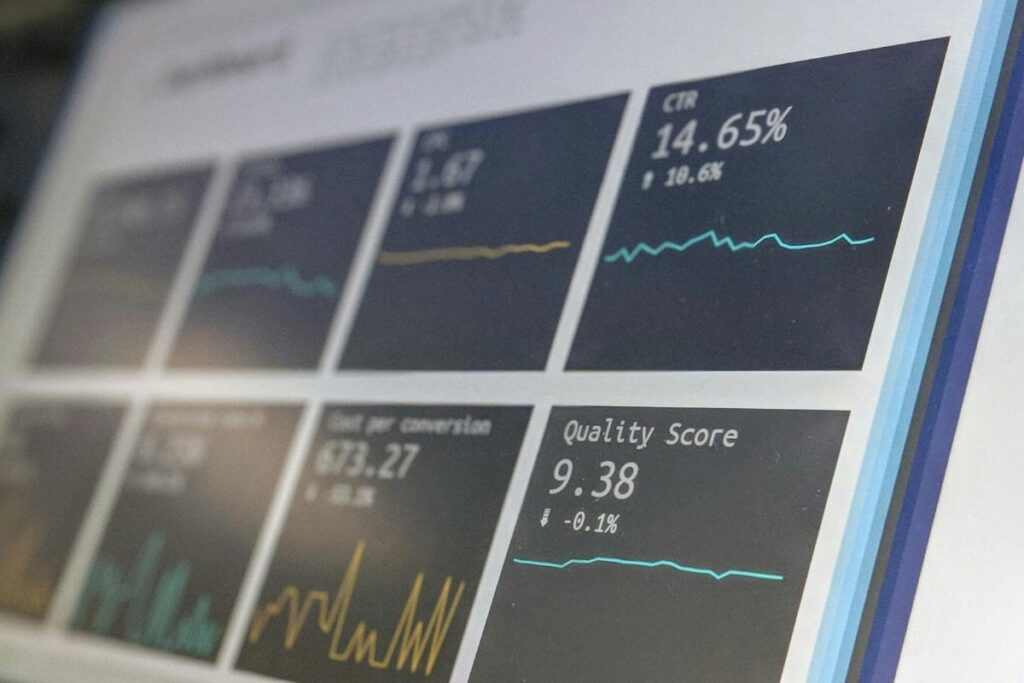
Data and analytics services provide marketers with the essential skills they need to prioritise their actions and have a greater impact on a client’s success, all without adding headcount to their business.
Rather than blindly going into a project, marketing data gives agencies the ability to base their strategies around facts, rather than guesswork. Not only does this allow agencies to clearly demonstrate their value to clients, but it can save time and money otherwise spent on less-than-ideal opportunities.
Whether it’s key performance indicators, performance forecasts, or insights into customer behaviour, having data available to help guide decisions makes your impact that much more meaningful to a client’s bottom line.
Data-Backed Efficiency for Your Agency
Being a responsive marketing agency demands data.
At Lunar, we help your agency better understand internal and client data. Together, we can build compelling narratives that clients love, connecting the dots and transforming numbers into action.
If you’re ready to start leveraging the power of data, request a free data report from us today.